
-
Call us now +977- 9705791255
-
Email us at pattalevillage@gmail.com
Nepal singing bowls—often called Himalayan singing bowls—are traditional metal bowls used for sound, meditation, and ritual. They’re beautiful and surprisingly deep in history, so here’s the low-down without getting too mystical unless you want that 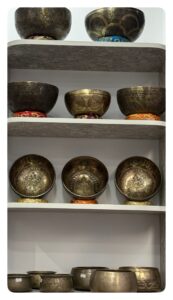
Nepal singing bowls are hand-hammered bowls, usually made from a metal alloy. Traditionally, that alloy included seven metals, symbolically linked to the seven classical planets (like gold for the sun, silver for the moon, etc.). Modern bowls may use fewer metals, but high-quality Nepali bowls are still made the old-school way.
Despite the name, singing bowls weren’t originally called that. They come from the Himalayan region—Nepal, Tibet, Bhutan, and northern India. In Nepal, especially around Patan and Bhaktapur, skilled metalworkers have been making them for generations.
Fun fact: historically, they were often used as everyday objects—for eating, storing grain, or offerings—long before they became meditation tools in the West.
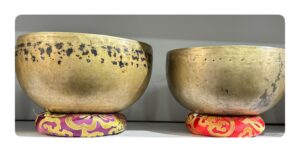
You play a singing bowl by:
Striking it gently with a mallet (like a bell), or
Rubbing the rim in a circular motion
This creates a long-lasting vibration that produces rich, layered tones. That vibration is a big part of why people find them calming—it’s not just sound, it’s felt.
Today, Nepal singing bowls are popular for: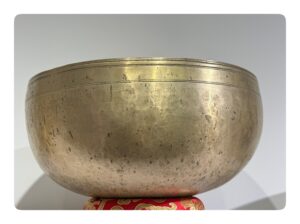
Meditation & mindfulness
Yoga and sound baths
Stress relief & relaxation
Spiritual rituals (especially in Buddhist contexts)
Sound therapy (some people associate different bowls with chakras)
Scientifically speaking, the sounds can help the brain shift into slower, more relaxed wave patterns. Spiritually speaking… people feel centered, grounded, and oddly peaceful. Both can be true.
Hand-hammered, not machine-made
Each bowl is unique in tone and appearance
Warmer, more complex sound compared to mass-produced bowls
Often heavier and thicker, which helps sustain vibration
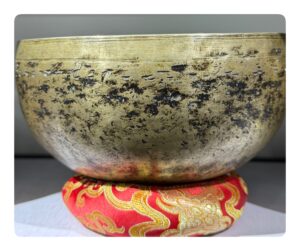
A genuine Nepali singing bowl usually:
Has visible hammer marks
Doesn’t look perfectly symmetrical
Produces a deep, lingering tone
Feels solid and heavy for its size
Traditional singing bowls of Nepal are handcrafted metal bowls with deep cultural roots in the Himalayan region—especially in Nepal (cities like Kathmandu, Patan and Bhaktapur are famous for making them). They’re cherished for their sound vibrations, meditative qualities, and artisanal craftsmanship.